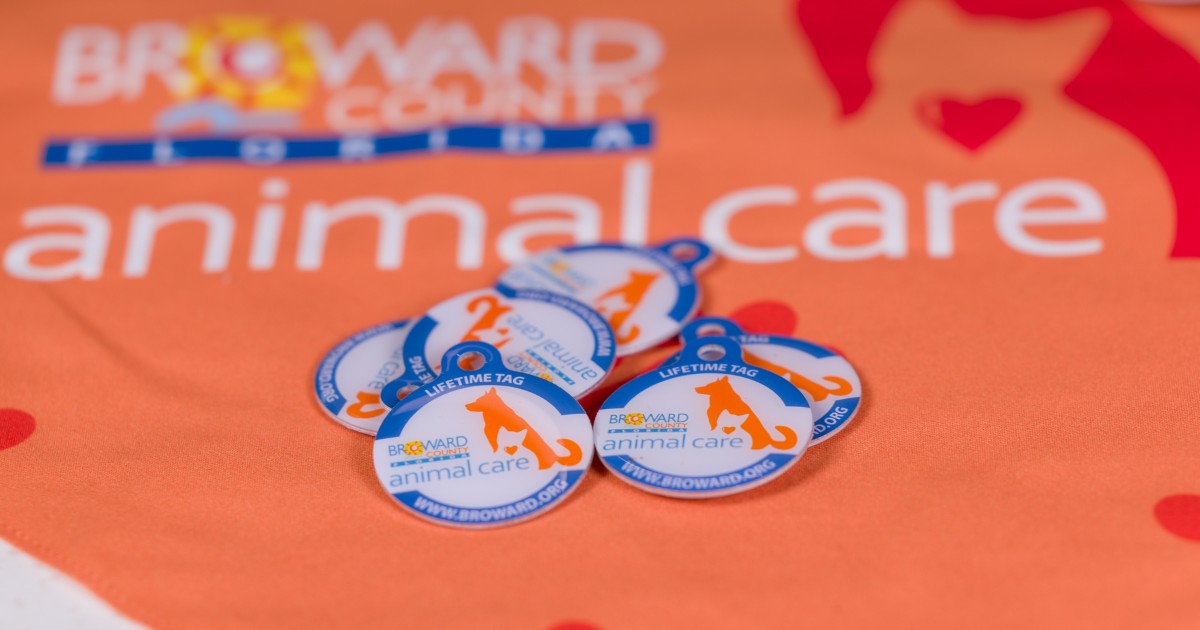
Broward County's Tags for Life program gives each registered dog or cat one durable identification tag intended to stay with that pet for life. Owners still have to keep the registration and rabies vaccination current, but they no longer need a different physical County tag every year.
The program makes pet registration simpler while preserving one of the fastest ways to reunite a lost animal with its family. It also rewards microchipping with a lower registration price.
Here is what Broward dog and cat owners need to know about eligibility, current fees, renewals, replacements, microchips, and County law. This guide was reviewed against official Broward County sources in August 2026.
What Is Broward County's Tags for Life Program?
Broward County Animal Care launched Tags for Life in early 2025. Under the program, a pet receives one County rabies registration tag with a unique number. That same physical tag remains assigned to the animal rather than being replaced during every renewal cycle.
The tag lasts for life; the registration does not. Owners must renew on time and maintain a current rabies vaccination or an approved medical exemption. Think of the physical tag as the permanent account number and the registration as the part that must stay active.
Who Must Be Vaccinated and Registered?
Under Chapter 4 of the Broward County Code, dogs, cats, and ferrets must generally receive a rabies vaccination by four months of age. Dogs and cats that are four months or older must also be registered with Broward County Animal Care and have a current County rabies registration tag.
The County code says a dog or cat owner should obtain the tag within 30 days after rabies vaccination. Each animal needs its own tag; a tag issued to one pet cannot legally be transferred to another.
New residents also need to pay attention. If someone brings a dog or cat into Broward County intending to live here permanently-or temporarily for at least three months-the pet must generally be registered in Broward County within 30 days after arrival.
Current Tags for Life Fees
Broward County changed its pricing structure effective May 1, 2025. According to the County's current Tags and Shots page, the commonly listed registration prices are:
- One-year registration for a microchipped dog or cat: $25
- One-year registration for a non-microchipped dog or cat: $55
- Three-year registration for an eligible microchipped pet with a valid three-year rabies vaccine: $65
- Replacement for a lost tag: $10, currently available through the Animal Care Adoption Center
Online purchases and approved veterinary offices may add a service fee of up to $5 per tag. Fees and purchasing options can change, so confirm the total on the official County page before paying.
The important change is that the discount is now based on microchip status, not whether the animal is spayed or neutered. Owners should be prepared to provide proof of an implanted microchip to receive the reduced fee.
Why Does Microchipping Cost Less?
A visible tag and a registered microchip solve different problems. The County tag lets a neighbor, veterinarian, or animal-care officer quickly connect the pet to its registration record. A microchip provides a second form of identification that cannot simply fall off with a collar.
Using both offers the strongest protection:
- The tag is immediately visible. A finder may be able to start the reunion without transporting the pet for scanning.
- The microchip is permanent identification. A shelter or veterinary clinic can scan it if the collar or tag is missing.
- The County registration confirms current information. An active record can help Animal Care identify the pet and contact the owner.
A microchip only works when the manufacturer's database has the correct owner information. After moving or changing a phone number, update both the microchip company and the County tag record.
How to Register or Renew a Pet Tag
Residents can begin at PetTags.Broward.org. Broward County also offers an online Tag Registration Database where owners can look up their pet's record, purchase or renew a registration, and request corrections.
Before starting, gather:
- A current rabies vaccination certificate or approved exemption documentation;
- The pet's existing County tag, license, reference, or notice number for a renewal;
- The microchip number and proof of implantation if requesting the lower microchipped rate;
- The owner's current address, phone number, and email; and
- Payment for the registration and any applicable service fee.
Tags may also be available through participating Broward County veterinarians or authorized suppliers. If you use a veterinary office, ask whether the County registration fee is included with the rabies vaccination or must be purchased separately.
Does the Tag Have to Stay on the Collar?
Yes, in most circumstances. Broward County law says the County rabies registration tag must be worn by the registered dog or cat at all times.
The Code provides limited exceptions, including certain organized exhibitions, field trials, competitions, supervised legal sports, and grooming. A licensed kennel, grooming facility, or veterinary hospital may remove the tag when its number remains recorded and clearly associated with that animal. A veterinarian may also order removal in writing for health reasons, in which case the pet must remain securely confined until the collar, harness, or tag can be worn again.
For daily walks, combine the County tag with secure equipment and follow the local rules explained in our guide to the Broward County leash law.
What if the Tag Is Lost or Damaged?
The tag is designed to last, but collars break and tags can disappear. If a Tags for Life tag is lost, stolen, damaged, or unreadable, request a replacement instead of starting a second registration for the same pet.
The County currently lists a $10 replacement fee and says replacements are available through its Adoption Center. Bring the corresponding registration information so Animal Care can connect the new physical tag to the correct pet record. Never place another animal's tag on your pet.
What if You Move, Transfer the Pet, or the Pet Dies?
Update the County record whenever important information changes. The Tag Registration Database provides options for correcting contact information and reporting that a pet has died or moved out of Broward County.
If ownership changes, complete the County's ownership-transfer process. The outgoing and incoming owners should also update the microchip manufacturer so the chip does not continue pointing to the wrong person.
Medical Exemptions and Service Animals
A licensed veterinarian may certify in writing that rabies vaccination would be harmful to an animal's health. That is a medical exemption from vaccination-not automatically an exemption from registration. Broward County law still requires an applicable registration tag, and an exemption lasting longer than one year must be renewed with updated veterinary documentation.
The County Code also provides a registration-fee waiver for a qualifying service animal when the handler submits the required County form. The waiver does not apply to emotional-support, comfort, or companion animals.
Why Registration Matters Beyond Avoiding a Fine
Registration is legally required, but its greatest everyday value is getting pets home. A readable tag can turn a frightening escape into a quick phone call. Traceable identification also gives Animal Care a direct path to the owner if the pet is brought to the shelter.
Registration fees also support the County's animal-care work. Broward County says tag revenue helps feed and care for shelter animals, provide medical treatment, and fund sterilization programs.
For an extra layer of protection, keep a personal ID tag with your phone number on the collar too. The County tag connects the finder to an official record; the personal tag may let them call you immediately.
A Quick Tags for Life Checklist
- Vaccinate on time. Dogs, cats, and ferrets generally need rabies vaccination by four months of age.
- Register dogs and cats. Obtain the County tag within 30 days after vaccination.
- Microchip the pet. It improves identification and currently qualifies dogs and cats for the lower fee.
- Register the microchip. An unregistered chip cannot reliably lead a finder back to you.
- Keep the physical tag. Renew the registration without discarding the lifetime tag.
- Keep the tag attached. Dogs and cats should wear it except during a recognized legal or medical exception.
- Update every record. Change the County and microchip records when your phone number, address, or ownership changes.
Frequently Asked Questions
Does "Tags for Life" mean I never have to pay again?
No. The physical tag is intended to remain with the pet for life, but the registration must remain current. Renew according to the expiration date tied to your registration and rabies vaccination.
Do indoor cats need a Broward County tag?
Yes. The County registration requirement applies to dogs and cats four months or older and does not create a general exemption for indoor-only cats. Indoor pets can also escape during storms, repairs, moves, or emergencies.
Is a rabies vaccination certificate the same as registration?
No. The vaccination certificate documents the medical vaccination. The County registration and tag document that the dog or cat is registered with Broward County. Owners generally need both.
Does my ferret need a Tags for Life tag?
Broward County requires ferrets to receive rabies vaccination, but the County registration-tag section specifically addresses dogs and cats. Ask Animal Care or your veterinarian about any documentation recommended for a ferret.
Can I transfer a tag to a new pet?
No. Each tag is assigned to one specific dog or cat and cannot be reused for another animal.
Where can I get help?
Broward County Animal Care can be reached at 954-359-1313. Its main facility is located at 2400 SW 42nd Street in Fort Lauderdale. Confirm current hours and service options before visiting.
Official Sources
- Broward County Animal Care: Tags and Shots
- Broward County Tag Registration Database
- Broward County: Updated Tags for Life Pricing
- Broward County Code, Chapter 4
- Broward County Pet Care and Wellness Clinic Information
A Final Reminder
Tags for Life removes the yearly tag swap, but responsible ownership still means keeping the registration, rabies vaccination, microchip, and contact information current. When all four are up to date, a small tag on the collar becomes one of the most effective tools for bringing a lost pet home.
County fees, clinic availability, and procedures may change. Check the official links above before registering or renewing. This article is general information and is not legal or veterinary advice.