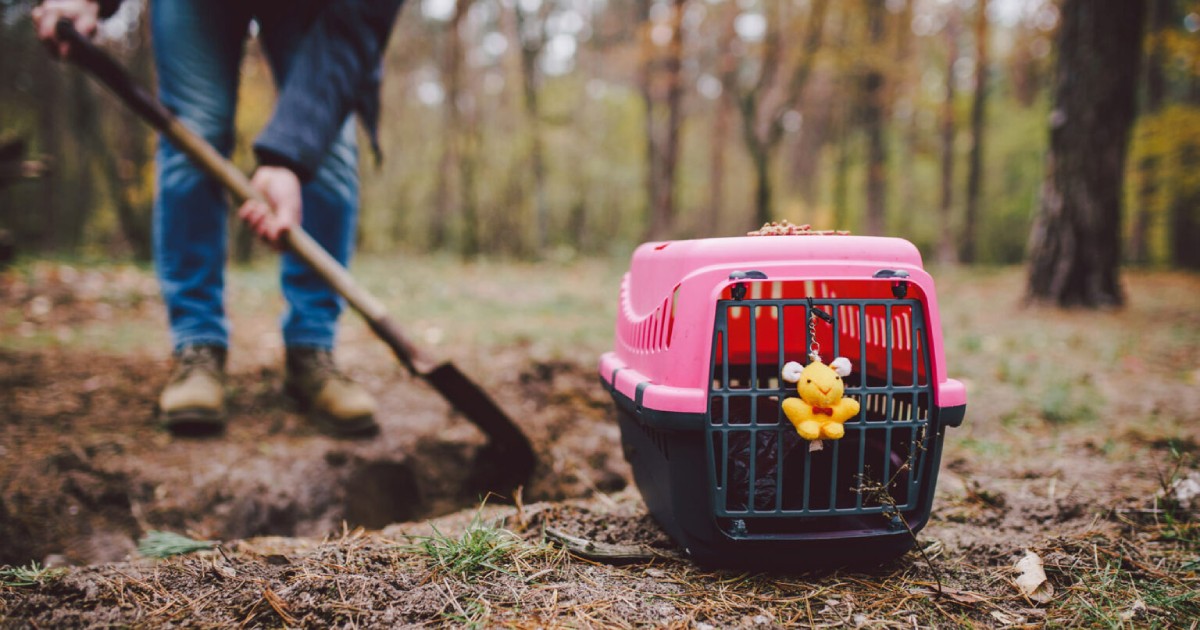
Losing a dog is deeply painful. When a pet has been part of the family for years, it is natural to want a final resting place close to home. Some Florida families consider backyard burial because it feels personal, private, and more affordable than other aftercare options.
But the legal answer is more complicated than a simple yes or no. Florida does not impose a blanket statewide ban on burying a dog at home, but state environmental rules, local ordinances, property restrictions, the water table, and the way the dog died all matter.
This article provides general information, not legal or veterinary advice. Rules can change, and cities, counties, homeowners associations, landlords, and public-health officials may impose additional requirements.
The Short Answer: Is Backyard Pet Burial Legal in Florida?
In some circumstances, yes. Florida's environmental guidance generally allows a deceased domestic animal to be buried on the property where the animal died when the remains are placed at least two feet below the ground surface and above the water table. Dogs are included in the state's definition of domestic animals.
That does not mean every Florida backyard is an appropriate or lawful burial site. Local rules may be stricter, and a shallow water table, flood-prone yard, well, septic system, utility line, rental agreement, easement, or HOA restriction may make burial unsafe or prohibited.
What Florida Law Actually Says
The original version of this article suggested that backyard dog burial is illegal in most residential areas. That statement was too broad. The current statewide framework is found in Florida Statute 823.041, Florida Administrative Code Rule 62-701.520(5), and the Florida Department of Environmental Protection's disposal guidance.
The details depend partly on the cause of death:
- If the animal died from disease: Florida Statute 823.041 requires proper disposal and permits burial at least two feet below the ground surface. The remains cannot be dumped on a road, right-of-way, or anywhere they may be eaten by animals.
- If the animal did not die from disease: Florida's environmental rule allows disposal on the property where the animal died, provided the remains are buried at least two feet below the surface and above the water table.
- If burial would occur on different property: the state rule refers to the property where the animal died or another property approved by the Department of Environmental Protection. Do not assume you can move the remains to a friend's or relative's yard without checking first.
The University of Florida's handbook on biological and animal-waste disposal also lists burial, licensed rendering, and a Class I landfill among Florida disposal options, subject to applicable restrictions.
Why Local Rules Still Matter
State law is only one layer. Florida counties and municipalities may regulate land use, nuisances, sanitation, excavation, and animal disposal. An incorporated city may have different requirements from the unincorporated part of the same county.
Before making plans, contact the city or county office responsible for code enforcement, animal services, environmental health, or solid waste. Ask a specific question: "May I bury my deceased dog on this residential property, and are there local setbacks, permits, or disposal rules?"
Also confirm that you have the legal right to alter the land:
- Homeowners association: review the declaration, rules, architectural guidelines, and common-area restrictions.
- Rental property: obtain the property owner's written permission. A tenant's emotional connection to a home does not create a right to bury remains there.
- Condominium or shared property: yards and landscaped areas may be common elements that an individual resident cannot excavate.
- Easements: utility, drainage, access, and conservation easements may limit digging even when you own the lot.
Special Considerations in Broward County
Broward County includes many separate municipalities, so there is no single answer that safely covers every address. A Fort Lauderdale property, a Coral Springs property, and an unincorporated Broward property may be subject to different local codes, zoning provisions, drainage conditions, and HOA rules.
South Florida's high water table and heavy seasonal rain are especially important. State guidance requires the burial to remain above the water table. If you cannot confidently meet that requirement-or if the site is flood-prone-cremation or professional aftercare is the safer choice.
If you find an unknown dead dog, cat, or wild animal rather than dealing with your own pet's planned aftercare, Broward County directs residents to contact Animal Care at 954-359-1313. Do not bury an unknown animal before authorities determine whether identification, disease testing, or investigation is needed.
Call Before You Dig
A lawful burial still requires safe excavation. Florida's underground-facility law generally requires advance notification before excavation. Florida Statute 556.105 generally calls for notice at least two full business days before non-underwater excavation, subject to specific exemptions.
Contact Sunshine 811 before digging and wait for utility operators to respond. Remember that a public utility locate may not identify privately installed lines, irrigation pipes, septic components, landscape lighting, or pool equipment. Those may require your own records or a private locator.
Choose the Location Carefully
If local authorities confirm that burial is permitted, select an upland, well-drained area. The site should be away from wells, ponds, canals, drainage structures, wetlands, septic systems, utility lines, sinkholes, and areas that regularly flood or erode.
The phrase "at least two feet below the surface" refers to the placement of the remains, not merely a two-foot-deep hole. The burial must also remain above the water table. Local authorities may require greater depth, more soil cover, or specific setbacks from property lines and water sources.
Consider the future, too. A burial site may be disturbed by landscaping, construction, a new pool, utility work, or a future owner. Record the location privately and use a durable marker if your local rules and HOA permit one.
If Your Dog Was Euthanized, Speak With the Veterinarian First
Many veterinary euthanasia solutions contain pentobarbital. Residues can remain in an animal's tissues and can poison wildlife or pets that uncover and consume the remains. The U.S. Food and Drug Administration has documented pentobarbital toxicosis in domestic animals and wildlife and notes that the drug can persist in tissue.
Because of the chemicals used in euthanasia and the potential for groundwater or scavenger exposure, Florida environmental guidance identifies cremation as the preferred method for euthanized animals. When cremation is not practical, that guidance prefers disposal through a Class I landfill following appropriate procedures.
Ask the veterinarian which drug was used and what aftercare method they recommend. Do not take a euthanized pet home for burial without discussing these risks and confirming that the proposed method complies with local and state requirements.
What If Disease or Rabies Is Suspected?
Do not handle or bury the body until you have spoken with a veterinarian, animal control, or the county health department if your dog died unexpectedly after neurological symptoms, exposure to a bat or wild mammal, a bite incident, or suspected contagious disease.
The Florida Department of Health advises avoiding further contact with a deceased animal when rabies may be involved and contacting the county health department or animal-control agency. Testing may be necessary, and damaging or burying the remains could make a public-health investigation more difficult.
If any person may have been exposed to saliva or nervous tissue through a bite, scratch, open wound, eye, nose, or mouth, seek medical care and contact the county health department immediately.
A Practical Checklist Before Backyard Burial
- Speak with your veterinarian. Confirm the cause of death, whether euthanasia drugs were used, and whether testing is needed.
- Check the law for your exact address. Contact municipal or county code enforcement, animal services, environmental health, or solid waste.
- Review property restrictions. Check your deed, lease, HOA or condominium documents, and any easements.
- Contact Sunshine 811. Allow the required time for underground facilities to be marked before excavating.
- Evaluate the site. Confirm that the remains can be placed at least two feet below ground while staying above the water table and away from sensitive areas.
- Use an appropriate container or shroud. Ask your veterinarian or local authority what materials are permitted. Avoid assuming that a plastic bag is environmentally appropriate.
- Prevent access by animals. The finished site must be secure enough that wildlife or neighborhood pets cannot uncover the remains.
- Keep a record. Note the burial location, date, and any approvals in your property records.
Alternatives to Backyard Burial
Backyard burial is not the only meaningful way to honor a dog. Alternatives may be safer, easier to document, and less likely to create a problem if you move.
- Private cremation: your dog is cremated individually and the cremated remains are returned to you.
- Communal cremation: several animals are cremated together, and individual remains are not returned. This is often less expensive.
- Pet cemetery: a dedicated cemetery can provide a marked burial place without using residential land.
- Veterinary aftercare: many veterinary hospitals arrange transportation, cremation, memorial products, or other disposition services.
- Class I landfill: Florida recognizes this as a disposal option, but contact the facility or local solid-waste authority first because acceptance procedures vary.
- Alkaline hydrolysis: sometimes called aquamation or water cremation, this may be offered by specialty providers in some areas.
Frequently Asked Questions
How deep must I bury my dog in Florida?
Florida's statewide framework requires the remains to be buried at least two feet below the ground surface and above the water table. A local code may require more depth or additional soil cover.
Can I bury my dog in a family member's yard?
Do not assume so. Florida's rule refers to burial on the property where the animal died or on another property approved by the Department of Environmental Protection. Property-owner permission alone may not be enough.
Can I bury my dog in a plastic bag?
Plastic does not biodegrade and may conflict with local or environmental guidance. Ask your veterinarian or local authority whether a biodegradable shroud, cardboard container, wooden box, or another material is appropriate.
What if I rent my home?
Get the property owner's written permission and verify local rules. Even with permission, burial may be restricted by an HOA, utility easement, environmental condition, or municipal code.
Can I bury cremated ashes instead?
Cremated remains generally present fewer biological and scavenger concerns, but you should still obtain the property owner's permission and check local or HOA rules before burial, scattering, or placing a permanent memorial.
Do Your Research
Florida law does not make backyard dog burial automatically illegal, but it does not make every backyard suitable. The safest answer depends on your address, the property, the water table, the cause of death, whether euthanasia drugs were used, and any local restrictions.
Before deciding, call your veterinarian and local authority. Taking time to choose a lawful and environmentally responsible option is one more way to care for a dog who meant so much to your family.